Thursday, January 5, 2017

Tall, dark, and mysterious -- and tough!


So last night at chess club was a little different for me.

I'm playing the normal guys, who are tough but not that tough. Kind of like me. I win more games than I lose there, though, and I'm currently rated in the mid-1500s, so that gives you an idea of the general strength of the club. That being said, I feel I'm quite underrated, as I haven't played a rated tourney game in many years. I feel I lean more toward 1800, give or take. Either way, class player, big nobody.

Anyhow, I'm playing games with them and in walks a new player to the club -- possibly Filipino and a little older than I am, I believe -- with an hour to go for the night. He is quiet, a bit mysterious, but cordial enough.

Charlie, one of our regulars, tells him: "You'll probably want to play Derek, as he's the only one who'll offer much of a challenge."

Okaaaay, I'm thinking, what the heck is this?

The guy sits down and I can tell by the way he moves the pieces, the way he physically moves them, I mean, that he knows what the hell he's doing. That's another thing people don’t talk about, frankly: the fact that a seasoned player actually handles the pieces differently almost every time. This particular cat has real long, skinny fingers and he'd pick a piece up with the very tips of them and then, kind of in an odd dance-move way, he'd sling them to the intended squares. That's the best way I can describe it.

And he was strong. I knew it immediately. He didn’t play like the other guys, not even close. This guy is a pressure cooker, the type player where each and every move means something, is a threat, and you have to watch closely or it's curtains quickly. He played fast, too, which told me he was playing most the opening from memory. I was, too, but I play a little slower than he was playing as a general rule, just in case I miss something.

Anyhow, he plays e4 and I shoot out Nf6 for an Alekhine. He pushes to e5 for the chase variation and the battle is going. I get into a little trouble, he gets into a little trouble, the position gets very, very dicey and unclear -- muddled, dare I say, like some of Alekhine's games. The position was so thick with threats it was bordering on ridiculous. It was as if a child were told to randomly put all the pieces on any squares he chose and then we came into it blind, just trying to figure it out.

Well, long story short, he sacrifices a knight that I cannot take. But I give him absolute hell for trying in the first place by batting his queen around for several moves, all the while slowly, slowly wiggling into a better position, myself. It took maybe seven or ten moves but finally, finally, I was able to wriggle my way into a place where I could take the blamed knight. It was still dangerous as hell, but I could tell it was reasonably safe. For the moment.

At this point, my heart is going a mile a minute, this guy is moving very slowly now and talking to himself while he thinks, the whole place is leaning over our game, and some are muttering that they don’t even understand what's going on because there are literally so many threats from each side it was tough to make any assessment. Which is, of course, how we both felt as players, too.

After I snapped that knight off and got my own knight into the game (which he'd corralled on the darned a-file for 15 or 20 moves), I ended up with a checkmate threat from two directions, no way to defend. He kept checking me with his queen, just kind of hoping I'd blunder into a mate, myself, as he had plenty of opportunity should I misstep, but in the end I held my own and retained my piece.

The freaking coffee shop blinked the lights to tell us they were closing so, a half-hour and about ten moves later, we quickly agreed to a draw and the look on his face told him he was glad for it -- I know I was. I told him it was like the knife coming out of my back and laughed: Painful, yes, but full of relief, as well. Even though it was an agreed draw, I can't help but think that I won the game. Still, the position was really strange and opportunities were everywhere, so who knows.

And, as is par for the course, the game was really important to me and I'd like nothing more than to study it more, but I hadn't written it down. Even though I had my pad with me. Yeah, I'm that guy.

So my opponent goes to the bathroom real quick and Charlie leans in and tells me he's "very, very impressed."

Puzzled, I asked him why.

"He's a 2170 and plans to become master this summer. Nobody here can get that far with him, and especially not with an Alekhine defense."

My eyes went wide and I was on top of the world. By then it was after 10:00 at night and so I had to race home and get to bed, but we yapped a little bit about today's players vs. yesteryear's, about right and wrong ways to learn and improve, about Fischer and Alekhine -- it was chessgasmic!

I had inadvertently gained the respect of a candidate master and then had a wonderful conversation with him and Charlie. If there's a better night at chess club, I sure haven’t seen it.

Thursday, February 18, 2016

The good moves nobody saw

Image result for chess coffee shop


So I’m at the chess club last night, delivering a proper thrashing to an older opponent I’d never faced before. He’d lost a piece early in the game but played on, forcing me to prove my worth.

Okay, I says to myself. He wants to get trounced, that’s what we’ll do.

But I didn’t rush; I took my time, tried to understand the position. After all, there’s little more embarrassing than losing a won game OTB, right?

I began to see sacrifices everywhere that netted me gain. Working through all the variations in my head took some time, but I felt I had some solid plays. Flashy, even. So flashy, in fact, that I admittedly kept looking up from the game to see if anyone was watching.

They weren't.

How could nobody be seeing this? How were they so wrapped up in their own games or conversations that my brilliant plays should go unnoticed? Like a child, I hesitated much longer between moves than necessary, hoping that someone would glance over at my game. I’d see their eyebrows go up, followed by the quick glance at me that would have resulted in raised eyebrows and a smile in return.

Still, nothing.

The energy (at least to me) was palpable. The endless continuations and sharp plays available to me were nothing short of fascinating. And yet, the men of the chess club continued to toil over their own positions, their own plays.

I couldn't blame them, but why does it seem that I’ve three to four players gathered round me when I’m doing the losing? Why does it seem like everyone wanders around, hands behind their backs, nodding and tilting heads only when the games are stale and boring or I’m receiving a whooping?

While my opponent thought, I began looking at their boards, at their positions, in hopes of a return glance. But it was no use: They were entranced in the happenings directly to their fronts, heads cradled in hands, the occasional sigh escaping lips as they contemplated.

I won the game with a double piece sacrifice for a forced mate —— a wonderful ending that only I enjoyed, that only I and my opponent witnessed. And he sure won't be sharing it about.

Alas, such is the torture of live chess.


P.S. Before anyone asks, I’d forgotten my chess notation books. The game is lost, although I could probably reconstruct the final position if I tried really hard. 

Photo credit: Greeley Tribune

Wednesday, January 20, 2016

Chess Sideshows Are Rubbish

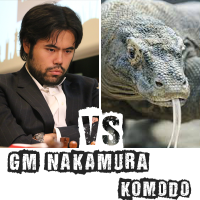
On Jan. 6, 7, chess prodigy Hikaru Nakamura took on Komodo, one of the world’s strongest chess engines and ... oh, blah, blah, blah. I am thoroughly unimpressed. Even though it was a pawn-odds match, meaning the monster engine started each game with one of its pawns missing, it still won. Was anybody surprised, truly?


Image credit: Chess.com

Now, before you go shaking your head at the monitor, silently accusing me of ‘hating computer chess’ or ‘not getting on with the times, man’, I’ll have you know that I virtually lived on various chess sites for many years and have much, much more engine experience than even I’m comfortable admitting.

I love chess engines. They are fun, they are fast, they are strong, they make great study partners, and I’ve written about them substantially in blogs and articles, both good and bad. To this day, I run every long game I play through Shredder running on a Fritz platform. That being said, I’m also very well acquainted with Winboard, ChessPartner, Arena, Dasher, Blitzin, Chesspad and quite a few other engine platforms.

Still, I think matches like these are bad form, bad taste, and bad for chess. In my mind, it makes a spectacle of the world’s elite. Nakamura, for instance, could beat anyone reading this blog post 100 out of 100 games at any time control, assuming the top ten players in the world do not read my chess entries. And yet, he subjects himself to a sideshow of sorts, conceding to technology for the world to see.

Sad.

I feel that we Chess Plebians should only view masters —— especially the FMs, IMs, and GMs ——  as nobles of our game, upper-class wood pushers to be looked up to, emulated. But as one GM after another (it seems to be all the rage today for GMs to make asses of themselves playing against engines for a little coin) gets trampled by chess tech, their ‘clout’, if you will, their street cred, drops substantially.

Today, as public spectacles such as Man Vs. Machine and our world champion being careened through the air in car commercials are on display for all the world to see, I’m betting most of us just want to watch the top players do battle. We just want to see them meet somewhere, off the books, and duke it out at whatever their chosen time control. We want to know what makes them tick, how they study/practice, if they still play for fun sometimes at a club or coffee shop, and whether or not they think they can beat certain engines.

It’s like Fischer vs. Alekhine or Kasparov vs. Morphy: We all say we’d love to see those matches but in reality, the wondering is better.

I’d personally rather wonder if Naka could put the hurt on today’s engines than watch him get slaughtered by them.

But that’s just me.


Tuesday, January 27, 2015

Chess: The Other Sport


Do I want chess to become mainstream? Do I want it to pick up corporate sponsors so the elite grandmasters are forced to play in Tide jackets or Nike ball caps and do commercials about teeth whitening products? Not in a zillion years. But boy, oh boy, I would really like there to be more players and fans.

Football. Hey, it’s an iconic American activity like baseball or eating too much or faking like you think politically correct things all the time. I get it, I really do, but I’ve never been a real sports fan. While I can appreciate someone who can hit umpteen homeruns in a row, a man who makes the touchdown of the century, or a heavyweight boxer who has literally knocked out every opponent who has ever faced him, it’s just not what floats my boat. Not entirely.

To each his own and trust me, those aren’t just words coming from me. I truly believe in them. If you wish to spend your Sundays eating and drinking too much and watching cars go round and round for five hundred miles or seeing unreasonably large and aggressive men sweat on a field, by all means, that’s yo thang. I don’t say much about it, because I can appreciate that people appreciate things that other than the things I do. I hope that makes sense.

But so why, then, is it okay for everyone to knock chess so easily? When I tell folks I’d rather play or watch chess than turn on the NFL, I’m sure you can imagine the looks and comments I get. I’m assuming because sports are very mainstream and chess is not, I’m seen as somewhat of a freak for choosing one over the other, and that’s okay; I probably am a freak. But I’m a freak who likes chess and keeps his mouth shut when it comes to other people’s passions. I wish more would do the same or, at the very least, give chess a try. It makes me wonder how many potential masters spend their spare time eating Cheetos and yelling at the television because some athlete screwed up a play.

For me personally, watching sports is just too passive an activity. I suppose it would be different if the fans of sports were also athletes themselves. It’s one thing to watch the big game and then go play it on a field, but quite another to fall into a drunken sleep, fingers orange and salty, belly protruding, mouth wide open. ‘merika.

And that, friends, is where chess and sports really differ. I can spend a few hours watching a top-tier match between two famous grandmasters and then actually compete in the game myself. No, not at the GM level, but that isn’t to say I couldn’t if I had the time and resources. But very few NFL fans are going to be drafted this next season, straight from the couch. That’s all I’m saying.

In our society, it is far, far more acceptable to be entertained by three-hundred-pound men hurling themselves at each other over a ball that isn’t even round than to enjoy an afternoon playing a quiet game of chess with a friend. I’m no psychologist, so I’m not sure what that indicates, but my best guess is that it probably isn’t great.

Don’t get me wrong, here, I’m not saying society would improve if everyone played chess, I’m not saying people would be better if they enjoyed the gentelman’s game, and I’m not saying sports are bad in any way, shape, or form. What I am saying, though, is that if more people had open minds, they’d surely receive more out of life.

Sucks to be them. My mind has been doorless since I was born. Bring it on, I say. I have watched sports, I know most of the rules to all of the games, and I even enjoy them time to time. But to be burned at the stake for choosing rook sacrifices over double plays is just backward-ass thinking.


Now, go checkmate someone. Or don’t. 

Thursday, February 6, 2014

Chess and Biorhythms


Do you follow your biorhythms? Few do, so don’t worry if your brow furled just now. I (and many others) believe that biorhythms play a huge role in our daily lives. All we need to know is what they are doing at any given moment. 

What are they?
In a nutshell, they are slow but steady fluctuations in our bodies and minds that affect us each and every day. They start the day we are born and move in a predictable pattern throughout our lives. That’s why we are able to follow them if we know how.

Our biorhythms tell us the condition of our physical, emotional, and intellectual properties. Those parts of us actually fluctuate wildly from real low to real high and everywhere in between, and not necessarily at the same time.

I go here: http://www.bio-chart.com/ and follow what’s going on with me. I just entered my birthday in, saved it, and each day I merely hit the Calc! button and I instantly know what to expect for the day.

Pfft, yeah, but do they work?
They do for me, kiddos. The only thing is, after years of following my biorhythms, I’ve found that my mental actually works somewhat opposite the chart in a sense. I believe it’s because of ADD. When it says my intellectual should be in the dumps, I almost always play my best chess. When it says my intellectual is high, I can’t play for nothin’.

But the physical and emotional are dead on, day after day, month after month, year after year. You know the old saying Knowledge is power? Well, it really is in this case! Let’s take a look at a few of the ways I use my biorhythms to help me in everyday life.

If my intellectual is low, as I mentioned, I find that my mind works slower yet much, much more efficiently for chess and other things. A low intellectual reading means it’s time to seek a standard game on the ‘net and dominate. When my intellectual is high, my thoughts are extremely fast and scattered. That doesn’t mean I can’t think, it just means I believe I’m less accurate and more prone to wandering.

If my physical is high, I really feel noticeably stronger. When it reports as low, I’m usually feeling tired and drained, just as it claims I should. I play my best chess when my intellectual is low and physical high.

When my emotional report is in the dumps, I usually *feel* in the dumps. Overly sensitive, a bit confused on what’s going on in life, dramatic. It’s spot on, every time. When it’s high, that’s the time to socialize and write and share and generally be engaged.

This isn’t a fake horoscope or a wives’ tale, either; this is scientific stuff that just never found its way to the mainstream. It’s much easier to read what some asswipe wrote about you and the stars than it is to consistently follow what’s happening inside our bodies and minds for real. That’s just the way it goes. 

I implore you to follow the readings on http://www.bio-chart.com/ for at least one month. Compare its claims to how you actually feel and think, and you’ll see what I mean. It’s eerily accurate and a great tool for predicting how we’ll do in almost everything. 

Just enter in your birthday, save it on the site, and check it every day as part of your internet surfing. If, after a month, you feel it’s total BS and it didn’t work at all for ya, let me know. In fact, let me know either way; I’m interested to see how it works with others because it sure works for me.

More biorhythm info: 


Wednesday, January 22, 2014

King Hunts and Lazy Bishops: The Bird


So last night an odd thing happened. I was playing an 1800 on the ICC. It was late and I was feeling adventurous, so I opened our second 45/3 game with 1. f4, also known as The Bird. It always provides an entertaining game, so I went for it.

As typical for the way *I* play 1. f4, my queenside bishop didn’t develop right away. Then, during the middle game, it still didn’t develop. In fact, all through my ultimately successful king hunt, the thing never, ever developed. And yet, amazingly, it actually helped to entomb black’s king down on *my* side of the board.

I wonder what the chances are? Oh, sure, beginner games get extremely wild. But what are the chances a couple A players will experience a game like that? It was surreal, I can tell you that.

I’ve listed the game below in PGN format. You can copy/paste into your favorite chess program and check it out if you like. I haven’t even gone over the game with my engine yet; I woke up and thought I’d better share this sucker. That was something else!

[Event "ICC 45 3"]
[Site "Internet Chess Club"]
[Date "2014.01.22"]
[Round "-"]
[White "Skwerly"]
[Black "FreshSocks"]
[Result "1-0"]
[ICCResult "White declared winner by adjudication"]
[WhiteElo "1833"]
[BlackElo "1781"]
[Opening "Bird's opening"]
[ECO "A02"]
[NIC "VO.07"]
[Time "00:48:53"]
[TimeControl "2700+3"]

1. f4 g6 2. e4 Bg7 3. Nf3 c5 4. Nc3 d6 5. Bb5+ Bd7 6. Qe2 Nc6 7. O-O Nd4 8.
Bxd7+ Qxd7 9. Qd3 Nxf3+ 10. Qxf3 O-O-O 11. a4 h5 12. a5 Bd4+ 13. Kh1 Nh6 14.
a6 e6 15. axb7+ Qxb7 16. Qd3 Ng4 17. Nb5 Nf2+ 18. Rxf2 Bxf2 19. Rxa7 Qb6 20.
Rxf7 Rhe8 21. c4 d5 22. Qa3 Kb8 23. Nc7 Qxc7 24. Rxc7 Kxc7 25. Qa7+ Kd6 26.
e5+ Kc6 27. cxd5+ Kxd5 28. Qb7+ Kc4 29. Qe4+ Kb3 30. d3 Rd4 31. Qe2 Ra8 32.
Qd1+ Ka2 33. b3 {Black resigns} 1-0

Tuesday, November 13, 2012

Houdini: The Best, Sure, but Necessary?


Oh, boy. I was reading a ChessBase article this morning, and they said something I thought was fantastically asinine and mind-bogglingly incorrect. I have been arguing about this exact thing for years now.  Here is the quote, regarding the Houdini 3 engine that is now available commercially:

If you were going to consult someone on a chess position, and had the choice between a grandmaster or the world champion, wouldn’t you opt for the world champion even if the grandmaster already provided an answer beyond your personal ability?

What? Why? That is ridiculous, in my opinion. Claiming that only the world champion would be the best coach/advice giver is completely off base. Miles and miles off base.

If I had a child who was just beginning to swim, would I need to hire Michael Phelps for lessons? Anything else is second best? Good grief, no. If I were starting to learn guitar, there would be many teachers besides Eddie Van Halen himself that would suit me just fine. 

It’s hype, folks. Most of the people who ask what engine they need are at the beginner or low intermediate chess level, and carry a rating somewhere between 1,100 and 1,600 Elo.

If we were to believe the article, then that player would benefit more from what the world chess champion has to say about their games as opposed to someone rated only a thousand or two above him. What a crock. That’s a load if I’ve ever heard one.

Is the new Houdini engine strong and smooth? Oh, I have no doubt. I just don’t happen to believe that, above the 3,000 Elo level, 100 points here and there is worth the sixty bucks you have to shell out vs. a free engine that’ll do the same thing for 99% of players out there.

Here is one thing I did like, though, being an engine fan:

These databases are known as endgame tablebases, and even just the sets with up to five pieces, take up about 7 GB. The Scorpio bitbases do the exact same thing, with perfect knowledge, but take up about 300MB and can be stored in the RAM, making them far more compact and easy for the engine to consult on the fly.

Okay, that’s pretty cool. That’s really cool, in fact. I have been into chess engines since around 2004, and I have seen tons of changes along the way. Back then, though, I would sign my engine on to a playing server and get into battles with other engines.

Tweaking them was the name of the game, back then. But they weren’t playing at the 3,300 level. I was screwing around with fast and strong (for then) engines like Aristarch, Arasan, TheKing (Chessmaster’s engine), Gandalf, Ruffian, and myriad others. This was all before the introduction of engines like Rybka and Fruit, two strong engines that pretty much wrecked the fun. 

In short: Hey, if you want to shell out sixty bucks so that you can say you have the strongest engine in the world, go for it. Houdini is a very, very nice engine and it’ll never let you down. If, however, you just need a grandmaster strength study partner, almost any free engine will do just fine. Trust me on that.

If you are rated in the 1,000, 1,500 or even 1,900 range, the 2,700 rated engine is going to tell you the exact same thing about your games that a 3,500 rated engine will. 

Just sayin’.


Looking forward, as always, to your comments. 
          

Friday, September 21, 2012

Chess Study: What is Correct?


I see a lot of advice about what, when, where, and how much to study chess. This advice is flung around like the Sunday laundry on every chess site and forum I’m a part of. Of course, if we wish to improve we *should* study, and that does raise the empirical questions: How? What? When? How much?

It’s a cycle, really, and it never seems to end. So, I’ll throw in my two cents.

I do not have a FIDE title and I’m not even a USCF expert, but I don’t believe one needs to be a powerhouse in chess to know the answer to the above questions. I think a good, healthy dose of common sense can get us quite far, both in chess and in life.

1. What should I study?

Well, I think it’s crucial for each player to assess their own play and get an idea, however hazy, where they are weakest. Do you lose a lot of games out of the opening? Do you have zero endgame skill? Maybe you rush through middle games and end up with really bad positions? Whatever your weakness, it’s probably easier than you think it is to recognize them and strengthen those areas.

2. When should I study?

This one is easy: Whenever you have time! Take a chess book with you to the doctor’s office, watch video lectures in the evening instead of a TV show, play through your own games with a critical eye and then an engine to see where mistakes are made, etcetera. Each person’s own life situations will dictate when they can study.

3. Where should I study?

This one seems simple, but maybe it isn’t. Should you study at the PC? Should you study on a board with a book open in front of you? Should you buy chess DVDs and study that way? Should you hire a coach and do what he/she tells you? The options are almost infinite, and I believe it’s up to each person to determine how they learn best. I was dealt a good helping of ADHD and so book study for me is trying; I far prefer videos, and the information sticks deeper. Try each method – see which one is best for YOU!

4. How much should I study?

Again, this is largely going to depend on YOU, and how quickly and how much YOU would like to learn and improve. See the trend, here?  If you get bored and space off after an hour of study, then you should study for one hour at a time. If you really love delving into a good chess book and working through the positions and variations all day on Saturday, then you should study like that. If you hate studying chess and would rather play bullet and fast blitz, then do that; just don’t complain when your rating and skill level never increases.

So, you see, ladies and gents, it is MY opinion that each student and lover of chess will require something different to get the maximum benefits. I guarantee you that I can get more out of a quality thirty-minute video than I can from a full hour of book study most of the time. I learn well that way, and so I tailor my study habits to reflect that.

Play a few long games, whether OTB or on the Internet, then take a critical look at them and decide where you most often go wrong. Then, study that part of the game! It really is that easy, folks.

Thursday, August 16, 2012

Greats who weren't Greats


Lately, I have been thinking about the greats who weren’t greats specifically because someone greater existed in their time. This has happened in every generation, but the 1920s and 1930s were a great example of the phenomenon, so we’ll use Alekhine as an example.

Because Alekhine existed and was so powerful, many great players unfortunately lived in his shadow, both then and now. When someone like Alekhine comes along, it’s very difficult to make a name for yourself.

Here is a list of a few greats who weren’t great because of Alekhine:

Hans Kmoch

Saviely Tarakover

Aaron Nimzowitsch

Frederick Yates

Frank Marshall

Rudolf Spielmann

Richard Reti

Geza Maroczy

David Janowsky

Edgar Colle

Fritz Saemisch

Akiba Rubinstein

Ernst Gruenfeld

Hans Mueller

Efim Bogoljubow

Vasja Pirc

Salo Flohr

Henry Grob

Vera Menchik

Reuben Fine

There are a ton more, but I’ll leave it at that so you get the gist. Now, just about every player on that list was very accomplished and extremely strong. Many of them had opening variations named after them, which are still regularly used today, such as Gruenfeld, Reti, and Pirc.

Now, have you ever wondered what the heck would have happened if the big boys like Euwe, Alekhine and Capablanca were out of the picture? Some of these ‘big’ chess names would have become giant chess names, that’s what.

I try and appreciate the games of these lesser masters, but the draw to Alekhine prowess is simply too great for me. I always end up firing up the Alekhine database and scrolling through the moves with awe.

Do you have a favorite player who lived in the shadow of a greater player?

Tuesday, June 5, 2012

2012 World Chess Championship Rigged


As most of you already know, Anand has retained his world champion title. Gelfand put up a heck of a fight but in the end, Anand got him. The question isn’t who the champ is, the question is whether or not how he got there is even ethical, chess-speaking.

The world championship changed a bit this year, and the winner was to be determined via rapid chess in the event of a tie, which there was. I don’t believe, personally, that rapid chess has any place in the world championship.

Anand is clearly stronger in rapid stuff than Gelfand, and both players knew this. Therefore, all Anand had to do was draw the match for a guaranteed win, because there was no doubt he’d be the victor in rapid play.

Does that mean he’s stronger? I don’t know. Maybe. What I do know is that it likely stole from his fighting spirit in the long-chess games; what is he to risk fighting for, when the win is handed to him in the rapids? Nobody in their right mind would do that.

The “first player to six wins” type matches are inherently a bit flawed, because they can go on and on and on, but in my eyes they are more fair, more *right*, than deciding who gets such a prestigious title via blitz games. To me, that makes Anand the world’s rapid champion, not the world’s chess champion.

Who knows who would have taken the match had they continued in classical time controls? I believe both players had strong chances and, if Anand really is the stronger player, he would have eventually come out on top, anyhow.

But jeez, give Gelfand a chance!

Rapid chess is a completely different animal than long chess. Yes, the rules of chess are the same, but the game is cheapened quite a bit by limiting the scope of thinking time. We all saw what happened to Kimbo Slice, a backyard boxer, when he tried mixed martial arts: he got has butt kicked.

In this chess scenario, Anand would be the mixed martial artist because he’s good at both long and short time controls, and poor Gelfand is the backyard boxer. He’s tough, but he is limited in the arena of rapid chess, so he’s going to lose the match. 

Understandably, the world champion should be good at both, I suppose, and Gelfand is extremely strong at rapid – just not as strong as Anand.

But does it even matter? 

I’m not convinced it does. With over a million dollars at stake per player, let these guys hash it out until a true victor emerges. Those two weren’t playing a tournament in hopes of winning a couple hundred bucks by taking their section; they were fighting for the *world championship*, and as such, I believe they should have had to play accordingly.

Just saying.

Saturday, May 19, 2012

The GM Draw: Let's Have a Look


I have blogged about this before, and there have been many discussions at chessforums.org about the same thing. While the ‘GM draw’ phenomenon can be annoying, it is also the natural, expected outcome many times. I’ll look at both examples below.

The annoying GM draw:

This is the one that is agreed to after twelve or fifteen moves of a boring-looking, well-known line between two grandmasters. Yawn. These short draws are only possible and only exist because of the half-point draw system. If draws were worth nothing, or if they *lost* half a point for the players, we’d see more fighting chess.  But that’s neither her nor there. It’s simply tournament strategy, nothing more. It saves them from expelling all their mental energy early in a match so they can use it for opponents who might prove problematic, as well. 

The natural GM draw:

Okay, this one is way more logical to me. You have two guys who have cleared the 2600 level in chess – 2600! That’s huge, folks. Beyond comprehension for most of us. Both the players know opening theory extremely well, they are tactical and positional monsters, and they are well-versed, if not complete experts, at endgames. 

Now, if you expect either of these players to fall for more than a few, really deep and well planned out tricks, you are smoking the good stuff. One player attempts an attack, the other sees it and thwarts it, and maybe creates a counter-attack. The first player sees this, thwarts it, and the game is eventually drawn after such a back-and-forth.

What’s so hard to understand about that?

The less mistakes and oversights each player makes in chess, the higher the chances of a draw. That’s just Logic 101, folks. The GM draw isn’t going away anytime soon, in either form, so get used to it.

If you like fighting chess, there are many, many GMs still around who don’t play for draws. Exciting chess still exists, you just have to know who to watch.

Thursday, May 10, 2012

Anand vd. Gelfand Title Match


Yay! It’s time for another world chess championship. This year is a real nail-biter, too, if you ask me. Anand, who has defended his title four times already, is said by some to be slowly losing his sharpness. Gelfand, the same general age as Anand, isn’t nearly as accomplished but is a world-class player, nonetheless. In fact, he’s rated below Nakamura, who I personally think would have a shot. But that’s neither here nor there, for this entry.

I think the general opine that Anand is ‘losing his touch’ isn’t necessarily due to anything he is or isn’t doing, but rather what others are doing. Carlsen has broken well into the 2800s and is rated above Anand, as are Levon Aronian and Vladimir Kramnik.

I won’t go into the ratings conundrum, but I think it’s a little unfair to say that Anand is losing his touch. He doesn’t necessarily have fiery combos like Alekhine but then, who does? Today’s top players cannot afford to take too much risk or they’ll get the game handed to them quickly, for the most part

Kasparov, arguably the best player of all time, did incorporate huge tactical shots and deep positional understanding into his games, but that’s why he was on the throne for so long: he could get away with such. He is Kasparov.

So, who do you think the favorite will be in the Anand vs. Gelfand match? Is there a favorite? Is it anyone’s game? I personally tend to root for the underdog and would love to see Gelfand display a stellar performance but even if he does, it won’t guarantee the title. Anand is no beginner. He’s wildly strong and has shown, beyond any doubt, that he’s a true chess artist.

Opinions?

Saturday, May 5, 2012

The Chess Stamp


So, the other day, a friend links me to a chess stamp auction on eBay. It was expensive, but he just wanted to show it to me because he knew I was into chess.

The stamp depicted a chess position.

I was like, “Cool!”

Then I looked closer, and I was like, “Wait just a tic...”

I knew the position. I told my friend so over the IM window, and I got no response; I could tell from knowing him for so long that he didn’t believe a word of that.

Possible thought process: Uh-huh... random position on a stamp and he knows it. Riiiight...

But I did. I knew I did. Here’s a paraphrased rendition of the IM conversation; my friend is in italics:

Hmm, there’s been a queen sacrifice, here. That was a nice mate.

(Silence...)

This is a mate that was brutally forced, and kind of right out of the opening.

(Silence...)

Dude, I’m telling you, I know this game.

Cool! (disbelief pouring out of the IM window...)

Got it! This game was played by the first world champ, Anderssen, in the mid-1800s. It’s known as “The Immortal Game” due to the irrefutable and deep sacrifices.

Wow!

(Silence for another two minutes)

Dude, use the magnifying glass over the stamp and look at the top. That’s a little freaky.

I did so, and it read:

Anderssen-Dufresne, 1852.

I’m officially a chess nerd. My friend couldn’t believe it and honestly, neither could I, despite that game being well-known and recognizable. I guess you know when you are a chess fan, eh?

Thursday, May 3, 2012

Online vs. OTB Concentration


Last night I got to thinking about one of the main differences between online and OTB chess: concentration level.

When you are sitting across from another man (or woman, as the case may be), and there is a real chess board with real pieces and a real clock to worry about, our mind is much, much more into the game than when we are staring at a screen with a chessboard on it.

For one, the distractions at home can be severe: instant messaging, email, the phone, a TV, the doorbell, pets, kids, parents, etcetera. Combine them all and you end up with what – 20% concentration on the game at hand? That doesn’t ever make for good chess.

There may still be small distractions in a club or tournament setting, but not nearly to the level there are at home, on the computer. Also, losing to a player who is looking at you is much different than losing to a series of numbers and letters on a PC screen. Face-to-face chess is far more like a battle than is Internet chess, in my opinion.

If you are really wanting to improve your chess game but don’t, for whatever reason, have regular access to real live players, I give the following tips to practice during your Internet games:

1. Play long games.

I can’t stress this one enough. Fifteen minutes is not competition chess; it’s glorified blitz. 20/20, 30/30, 45/45 or even 60/0 are all good time controls if you really want to sink into a position you won’t necessarily lose if the phone rings.

2. Set aside good times to play.

Try and schedule or seek games when you have a good couple hours to play, and fill that time up with quality chess. If, for example, you have two hours to devote to chess, you’ll get much more out of playing a single 60/0 game than four 15/0 games. You likely wouldn’t hurry a big exam which required a great deal of thought and accuracy, so don’t hurry your chess games.

3. Study them afterward.

Once you complete a game, whether you won or lost, go over it again by yourself. Make sure you know where critical mistakes were made, which side made them, and how the win was executed. Go over it with your own mind before implementing an engine because they can make for lazy studying.

4. Minimize distractions.

Turn off the IM windows, close the Facebook tab, ignore emails as much as is reasonable, and keep the game on your screen. A single switch to another window breaks *all* concentration we had on the game. It’s a shame to lose a great battle because you switched back to the game and blundered. Ask me how I know that.  *giggle*

If you are a blitz or bullet player who simply enjoys speed chess, of course, that’s fine. More power to you! But if you are wondering why your rating hasn’t increased in the last year, and you are not taking your online games as seriously as you could, you are doing yourself a great disservice. Get into those games!

Friday, April 27, 2012

The Internet is Changing Chess


Well, that’s a pretty broad statement, but a very true one, as most of you realize. Beyond the obvious changes, though, lie subtle ones that are so commonplace now, some chess players might not even know they are new. Let’s take a look at a few of the ways Internet and computers have changed chess, permanently.

1. Hate-sitting

Sometimes called ‘clock-sitting’, it is when one player, usually the losing one, just stops moving and allows their clock to run down instead of resigning. It’s annoying in bullet chess, it’s downright uncool in long games. Back when chess was only played OTB, hate-sitting was a rare occurrence, indeed. It’s much more difficult to sit there with a smirk on your face letting your clock run down while your opponent is two feet away, physically looking at you.

2. Fast time controls

Sure, the old masters played speed chess, but not one-minute games, and not with anywhere near the regularity they appear today. In fact, there are far more bullet games played on the ‘net each day than any other type of chess. That is definitely a sign of the times. It’s very hard to play 2/1 when your clock is an hourglass.

3. Cheating

Ah, yes, cheating; you knew it had to be mentioned. There have been OTB cheaters, but the number is so miniscule compared to online cheaters as not to be mentioned. We’ve all heard of Toiletgate and the incident at the World Open a few years back, but OTB cheaters are caught pretty readily, whereas online cheaters using a program are much harder to detect, especially if they are doing it correctly.

4. Regularity

Imagine, for a second, there were no Internet chess games available. You would have to wait until club night or, if there are no clubs in your area, you’d have to play limited opponents that would likely be crushed by you every game if they were only casual players. Today, we can hop online and within seconds get any kind of chess game we choose, and against any type of opponent. That is amazing, when you think about how the chess-world was pre-Bobby Fischer. Just amazing!

5. Lessons for FREE!

Alekhine couldn’t sign on to YouTube in 1924 and learn the newest lines of an opening he was interested in. Back then, it was learn it by books or innovation, or don’t learn it at all. I believe this is one of the many reasons that kids and new players are so much stronger today than they were back when. Every one of us has access to thousands and thousands of chess lessons and published games at the click of a mouse.

6. Discussion forums (such as chessforums.org)

Before the common household use of computers, you discussed chess news and lines with someone you physically knew (or maybe by telephone or mail), or you didn’t discuss them at all. Today, information moves so quickly that the average player knows much more about all facets of the game than they did in Alekhine’s day; that’s a fact.

7. Study habits

Before computers, players were meticulously going over opening lines, endgame techniques, and working things out with other players over an actual board. Today, we can fire up any of a gajillion databases, watch a sea of videos, hire strong masters to train us via Skype, and use powerful engines to immediately evaluate any position in the world. Times, they say, are a changin’.

8. Money

The Internet has opened up a great big highway for the money monster. Masters can now charge for lessons and give them from the comfort of their own homes. Businessmen can open up pay chess sites and collect both member and ad revenue. Grandmasters are paid to host online simuls, give lectures on games or theory, record video lessons for the masses, and even play each other. Try that in 1930. 

There are myriad other ways that the Internet/computer has changed chess, but I’ll leave you with those eight for now. Who knows what lies in the next five, ten, fifteen years? The huge changes we will see are going to be both exhilarating and terrifying.  

Wednesday, April 25, 2012

Carlsen on Colbert


Eh. I’m torn on this one, I guess. If you missed it, you can check it out here:


No matter what Jen Shahade and others try, chess has always been and likely always will be sort of an ‘underground’ type thing. Having said that, I’m not sure that putting Carlsen on the Stephen Colbert show and broadcasting a couple of his modeling photos is going to do chess any good.

Then there were the questions: Do the pieces talk to you?

Really?

I realize that Colbert has his thing going and he has a show to run, but that’s the best he could come up with for the world’s highest-rated chess player? I know he had to make some schtick out of the whole thing, but I think any seventh-grader could have come up with that one.

And then challenging him to rock, paper, scissors; c’mon now! I’m glad, at least, that Carlsen won. I know that a joke is a joke and that I’m likely super-sensitive when it comes to chess heroes being ridiculed on live TV, but I was truly hoping for more than a three-minute waste of time segment of the show.

Weren’t you?

Any attempt to make chess mainstream is going to immediately fall on its face, and I think that’s a good thing. I don’t know about you, but I don’t want to see a bunch of flat-biller morons wearing Tapout shirts at chess events, toting pitchers of beer and blaring house music.

No thank-you, ma’am.

Monday, April 9, 2012

Alexander Alekhine: No, he didn't choke.


Photo from ChessBase.com, not mine.

Recent posts at http://www.chessforums.org/ have prompted me to create the blog entry I have always wanted to: One about Alexander Alekhine’s mysterious death. His entire life was shrouded in a sort of clouded veil but his death, I believe, is a downright conspiracy.

I’m pretty darned well-read when it comes to Alekhine. One guy who may surpass my own knowledge is GM Kevin Spraggett, who also thinks that Alekhine didn’t choke on any meat when he died. You can find his blogs on the subject here:

http://kevinspraggett.blogspot.com/2009/03/part-1-alekhines-death.html

http://kevinspraggett.blogspot.com/2009/03/part-2-alekhines-death.html

Also, the ChessBase article outlining the subject:

http://www.chessbase.com/newsdetail.asp?newsid=3005

As you can deduce for yourself having read those articles, the world-champion chess match between Alekhine and Botvinnik was officially put into motion on Saturday, the 23rd of March, 1946. Alekhine was found dead the next morning, having “choked” on meat.

Puhleeze.

While Alekhine was born in Russia, he was playing for France. It is my belief that the Russians were terrified that a defector, Alekhine, would destroy Botvinnik, one of their own, over the board. Botvinnik was good, yes, but was he good enough to beat one of the strongest tacticians ever to grace the game of chess? They couldn’t take that chance.

The Russians, instead of risking one of their own being embarrassed by Alekhine, decided to snuff-out the problem permanently. If his death were just a total coincidence, and positively of natural causes, I likely wouldn’t bat an eye at it.

But it wasn’t.

If you look at the photo, which I snagged from ChessBase (it can be found on a ton of sites, though), you’ll see that Alekhine appears peaceful, as if he just dropped off in his sleep. One second there, the next, not.

Bullshit.

You don’t need to be a medical doctor or a forensic scientist to know that people, when choking on food, don’t just lay back and let it happen. Therefore, there is just no way that his chess table would still be set up like that, that his dinner tray would still be arranged, and no way he’d be laying there peacefully.

Also, they claimed he was holding another piece of meat in his hand when they found him. Really? Seriously? Minute after minute went by while Alekhine couldn’t breathe, dying, and he still thought it best to keep the next bite handy? Crime Scene Fail is what that photo depicts.

A trained rescue diver can hold their breath for a few minutes longer than regular folks. For the rest of us, I have to assume that three minutes without breathing would be virtually impossible. But let’s go extreme and say he lasted a whole five minutes, choking on that piece of meat.

You mean to tell me he didn’t flop around and panic? That he just sat there calmly? C’mon, now.

According to one site, the brain itself begins to die in under six minutes when choking, and incurs irreversible damage in ten minutes. That sounds about right, to me, so my five-minute-suffering may be possible. It didn’t happen in Alekhine's case, though.

Site: http://www.emedicinehealth.com/choking/article_em.htm

Now, look at the picture of his death scene at the top of this blog again. Does that look like a man who choked on meat? No, it doesn’t, not a single bit. That is a picture of a man who was positioned like that after he was killed.

More Weirdness from the Photo

Note the aforementioned peg chessboard off to the side, in start position. I guess it’s feasible that he would eat before studying but again, a choking, thrashing man would have kicked that shit all over the place. There’s no way it’d still be intact, just two-feet from where he “choked to death”. Again, I’m no M.D., but that seems way, way too far-fetched to believe.

Also, he was in a hotel. Why would he eat dinner in a coat? It isn’t like he was watching the gas bill. He doesn’t look very comfortable, at all, if you ask me. I don’t know too many cats who keep their bulky jackets on while eating indoors. Is it possible? Of course. It just doesn’t seem very probable.

Also note that all his plates are completely empty. How unfortunate that he choked on the very *last* piece of meat that was available to chew. Yeah, right. Meat usually comes with a side, right? Potatoes, vegetables – something. Who the hell eats the sides first and the meat last?

No, he was done with dinner and out for a walk, like it says in Mr. Spraggett’s blog. It was only later, after he was gunned down, that he was taken back to his room and posed like that.

This is just my opinion, of course, and I have no proof to support my case past the circumstantial stuff I’ve outlined here. Very compelling evidence would have to surface in order for me to change my mind, though; I'm pretty set on my opinion in the case of Alexander Alekhine.

Our fourth world chess champion was murdered, plain and simple.

Sunday, April 1, 2012

Looking for Moves in Chess


In this blog entry, I’m going to discuss a few things about ‘moving’ in chess. This will be mostly aimed at beginner to mid-level players, because I think it’s something often misunderstood. The difference between ‘looking for moves’ and ‘carrying out a plan’ may seem subtle to the newcomer, but they are vastly different.

When asked how he wiped away his opponents, Alexander Alekhine said something to the effect of: I think up my own moves, and I make my opponent think up his.

That’s pretty powerful, when you think about it: he’s saying that no matter what the other player already knows, how ‘booked up’ he is, or how brilliantly he may play, Alekhine would still be able to out-think them in a match.

Alekhine is well-known for leaving book lines early in the game. He liked to mix things up, to dare his opponents to walk into his territory. Sometimes it worked and other times it didn’t, but no matter the outcome of the game, it was always a down-and-dirty street fight with Alekhine.

So, what was his deal? Yes, he is known as one of the most studious masters of all time and yes, he possessed oodles of talent and was a very intelligent man. But what did he mean by ‘thinking up his own moves’? Well, he wasn’t referring to single moves, I can tell you that.

A leg is a leg, and an arm is an arm. A torso is weird without a head, and legs are odd without feet. But, put them all together in the correct order and place, and you have a body. The same goes with chess. A move is just a single move; it can either be good or bad, or even indifferent, but it’s still just a move.

Each move indicates, or should indicate, a small part of a larger plan. The amateur just slaps out the first ten moves of an opening he kinda-sorta knows, and then ‘looks for moves’. In other words, he’s looking for knock-out blows like piece wins or immediate threats which may cause his opponent to blunder badly.

Masters look for moves, too, don’t get me wrong. But when they are looking for moves, they are trying to find moves that best support the plan they have come up with in their head. This is what’s largely referred to as ‘seeing X-number of moves deep’. Contrary to popular belief, there is no set number of moves ahead that a certain GM, or anyone else, can see. Depending on the position, that number could be low or high for all of us. It’s more that the GM can see the plan inside the position, rather than an exact number of moves deep. Through years and years of serious play and study, the board vision of a master becomes quite keen.

An amateur doesn’t understand the importance of a sound position. He or she just wants to have fun making threat after threat, sacrificing pawns and pieces, and doing their best to find brilliant moves. If they stick with the game long enough, they’ll find that brilliant moves are just an indication of a brilliant plan, and nothing more.

So what am I trying to say? I’m saying that instead of necessarily “looking for moves” each turn, formulate an all-encompassing plan. Of course, plan-less games are won every day by thousands of people, but not against strong opposition. If two inexperienced players have a few games, they can literally be as interesting as watching strong GM games, and sometimes more so. The wild piece sacs, the unsound pawn pushes, the ‘see a check give a check’ mentality; it’s all very entertaining. It really is.

But, you cannot go off half-cocked against a master and expect good game results. Why? Because in any given position, and I do mean any position, a master is going to come up with a better plan than the amateur. Because of that, he’s going to find better, stronger moves.

If you find yourself often without a plan in chess, you need to stop and reevaluate that part of your game. The ‘looking for moves’ bit works against 1500s on the Internet, sure, but if you hope to ever scalp a master, you’d better ‘look for a plan’, instead.

Thursday, March 29, 2012

Dreaming of Alekhine


Okay, this is going to be a weird post. I should preface it by saying that I’m a pretty logical person who has a fascination with the unexplainable. Having said that, here are the highlights of a dream I had in which Alexander Alekhine gave me chess advice.

I was in a large hall, like a ballroom. There were tables with white cloths everywhere, and stuffy-looking men in dark suits were dining at each one. It was a chess master conference, via the ‘30s sometime, probably.

I recognized quite a few of them but I didn’t see my favorite guy, Alekhine. I remember hoping he was there and hadn’t been forced to miss the conference for whatever reason. I walked around slowly, looking around for a glimpse of the player who, at that time, was the strongest in the world.

I found him way in the back, throwing hundreds of white 8x10 pieces of paper into a large dumpster. I looked at them, and they were chock-full of long division, written in pencil. Each page had an impossibly big division problem on it.

I asked him what he was doing.

He replied that this is what the masters do to practice. He went on to say that when I could do problems like these entirely in my head, I would be ready to become a chess master.

Long division? Really? What the hell did all this mean?

I don’t honestly think Alekhine meant what he said literally. Rather, I think it was a metaphor for chess studying, but I’m not at all sure. If he did mean that I have to do page-long division problems in my head, I’m in real trouble because math is definitely not my forte.

I believe he may instead have been referring to board vision, memorization, maybe playing entire games through in my mind’s eye. I believe he was trying to say that the surface studying that I do (and, let’s face it: who doesn’t?) isn’t going to cut it if I want to be really good at the game. A world champion doesn’t casually watch a few videos and read half a chess book and then go conquer the competition. That just isn’t the way it works.

Weird dream, eh? I’ll never forget it because it seemed so... real. He was there, I fully believe that. But what did his cryptic message mean?

Wednesday, March 28, 2012

Call me Alexander


When I was in my early-to-mid twenties, I partied quite a bit. I always brought a chess board with me to parties, but this was before I started seriously playing chess; I didn’t even know that openings existed. I was just better than my friends.

Anyhow, I remembered a funny thing, today: Whenever I was playing chess and someone would call my name, I’d request that they call me Alexander. It just sounded “chessy” to me. I had never heard of Alekhine, much less any other famous players. I don’t believe I knew who Fischer was, either.

But then, several years later when I got heavily into chess, I found that Alexander Alekhine was by far my favorite master, old or new. I loved his style of play, I loved the time he lived in (for whatever reason, I’m highly intrigued by the late 1800s and early 1900s), I love his chess quotes and, of course, his name rocked, too. ♫

My obsession with Alekhine goes deeper than the surface, though. I will read any articles about him, I have most, if not all, of his books, I have even ordered 8x10 glossies of him from the Internet to hang on my wall. The man was more than just a chess god, too; he lived a very rich and interesting life. No, he never made much money, but his tale is an intriguing one, nonetheless.

Whenever October 31st falls on a chess club night, I bring a cake and candles for Alekhine because that was his birthday. I have Alekhine databases on every computer and I study them religiously. It’s neat to watch his style of play drastically change once he realized it had to if he wanted to play in the Big Leagues.

Do you have a player you are borderline or completely obsessed with? How come? Was he a world champ? Is it a she? Tell us a little something about why you like them!